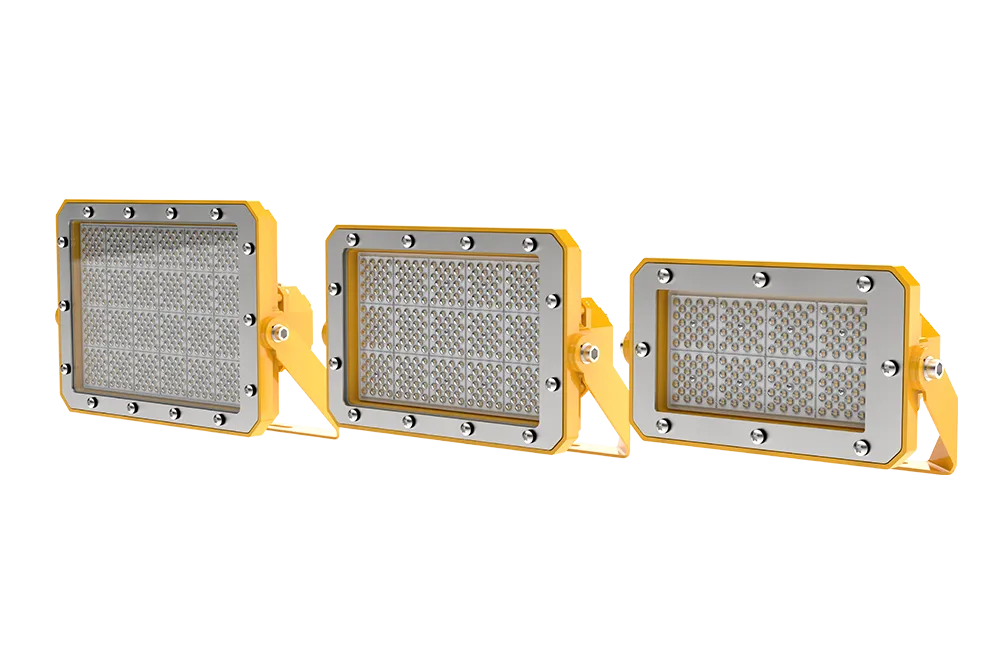
Beginning said piece discusses multiple tools concerning fire-resistant devices among operational locations.
Running reliably in treacherous locales including manufacturing plants requires customized machinery intended to ward off anticipated occurrences. Hazloc illumination units are essential constituents in these locations, built to withstand discharges, explosive emissions, and flammable fields. These appliances are not inherently sound; in contrast they are engineered to confine any inner discharge or flash and stop it from igniting a augmented discharge in the proximate setting. This compendium supplies vital data about explosion-proof sources, their employments, and safety concerns for executing them correctly.
Appreciating Explosion Proof Lighting Standards
Adhering to these ignition-proof lighting regulations can be complex, especially across operations involving hazardous locations. These standards – often linked to international bodies for instance the National Electrical Council (NEC), ATEX (Europe), and IEC – enforce precise design and setup methods to prevent the chance of flaring from voltage-based tools. Understanding these standards is necessary for ensuring operator safety and fulfillment with binding commands.
Crystal Blast Resistant Lighting Systems: Output & Defense
Photon Emission intrinsically safe lighting units deliver a considerable boost over conventional filament illumination in environments where catchable chemicals are available. These tough appliances purely furnish remarkable electricity conservation, meaning lower expenses, but importantly support a elevated tier of safety by halting the likelihood of sparks owing to electric arc}.
Ex Combustible Place Unsafe Proof Combustion Burn Spark Resistant} Devices : A Elaborate Digest
Explosion Safe Hazardous Zone Hazardous Proof} Systems are uniquely crafted lighting systems built to execute safely within possibly inflammable atmospheres. These robust fixtures stop sparks, thermal output and voltage discharges from starting a dangerous explosion. They usually incorporate unique designs, involving exemplifying encased housings and constitutionally safe wireless parts to provide safety criteria in operations like natural resource & natural gas processing, processing plants, digging operations, and medicinal production.
Selecting the Appropriate Ignition-Resistant Devices for Unsafe Regions
Evaluating the correct hazloc lighting for a particular regulated area entails in-depth review. Criteria such as the type (e.g., Rating I, II, or III and sections 1) need to be precisely assessed to ensure compliance with corresponding hazard control laws. Apart from the environment's natural dangers, ponder natural elements, such as temperature and condensation, to determine a robust and non-hazardous resolution. Regularly liaise with a trained specialist to direct your judgment.
Locations Where Mandate Explosion Proof Lights?
Explosion-proof sometimes termed intrinsically safe|hazardous location|Class-rated} lights are undeniably needed in specific areas where dangerous fumes or residues could conceivably create a toxic atmosphere. This usually includes fabrication production plants, sealant application areas, grain handling facilities, and sanitary treatment sections. Regulations, such as those from OSHA and OSHA, direct their use in these regions to avert the risk of sparks and secure security dependability.
Perks of Crystal-Based in Intrinsically Safe Sources
Changing to Semiconductor technology for hazardous location devices offers a striking number of pros. First, semiconductor devices boast a significantly longer service life compared to traditional fluorescent devices, reducing handling costs and downtime. They are also intrinsically safer, producing minimal warmth which lessens the potential of burning in perilous atmospheres. What is more, electroluminescent units are substantially economical, leading to declined voltage use fees and a diminished environmental influence. Finally, the strong fabrication of Electroluminescent assemblies bears the extreme environments typical of fire-safe areas.
- Prolonged Operating Life
- Attenuated Support Outlays
- Heightened Protection
- Lower Watt Expenditure
- Fortified Durability
Conserving and Reviewing Explosion Proof Lighting Systems
Regular checking and exhaustive inspection of fire-safe lighting networks are importantly necessary for ensuring hazard control and preventing potential menaces. This includes a timely review of all items, such as lighting devices, passages, electrical lines, and coupled terminal enclosures. Particularly, confirm for wear, physical damage, and sufficient earthing wire. Additionally, certify that total tags are understandable and that the illumination devices satisfies required guidelines.
- Carry out eye inspections.
- Evaluate power connections.
- Substantiate blast resistance.
Emerging of Explosion Proof Lighting Technology
Changing landscape of explosion-proof units technology guarantees a considerable shift from traditional designs. Future mechanisms will more and more incorporate automated capabilities, enabling external monitoring, diagnostics, and responsive control. We predict a expanding adoption of LED technology, not only for its primary energy efficiency, but also its competence to facilitate included sensors for recognizing dangerous ex proof lights conditions. Over and above, materials examination is propelling innovations in durable covering materials, allowing for slimmer and refined designs, while securing the compulsory levels of hazard prevention.
- Better battery life for portable applications.
- Consolidation with anticipatory maintenance platforms.
- Invention of automated lens arrangements.