Opening
This mounting sophistication found in contemporary vehicles presses for an entire comprehensive perception of diagnostic systems, primarily pertaining to On-Board Diagnostics II (OBD2) and Tire Pressure Monitoring Units (TPMS). Within Europe, Asia, and the US, these solutions perform using alternative frequencies. OBD2 specifications are largely consistent globally, mostly utilizing ISO 9141-50, KWP2000, CAN, and others, but regional deployments can bring about minor discrepancies. TPMS, however, is where significant frequency diversities come up. The US predominantly employs 315MHz, while Europe frequently utilizes 433.92MHz, and Asia manifests a more varied range including both frequencies and alternative bands. Therefore, correct diagnostic devices must be furnished with the aptitude to translate these multiple frequencies to promote effective resolution and maintenance.
Analyzing TPMS Sensor Frequencies: A Global Guide (Europe, North America, Asia)
Knowing tire pressure tracking system (TPMS) reader channels through the earth appears complex. Customarily, North lands chiefly utilize 315 MHz, while some current vehicles exploit 433 MHz. Alternatively, Europe and most of Asia chiefly serve on the 433 MHz waveband, with some provincial variations found especially in distinct Asian lands. Consequently, central to prove the right transmission preceding obtaining TPMS transmitters to secure agreement and circumvent feasible hurdles.
EV Diagnostic Tools: OBD2 Compatibility and TPMS Integration
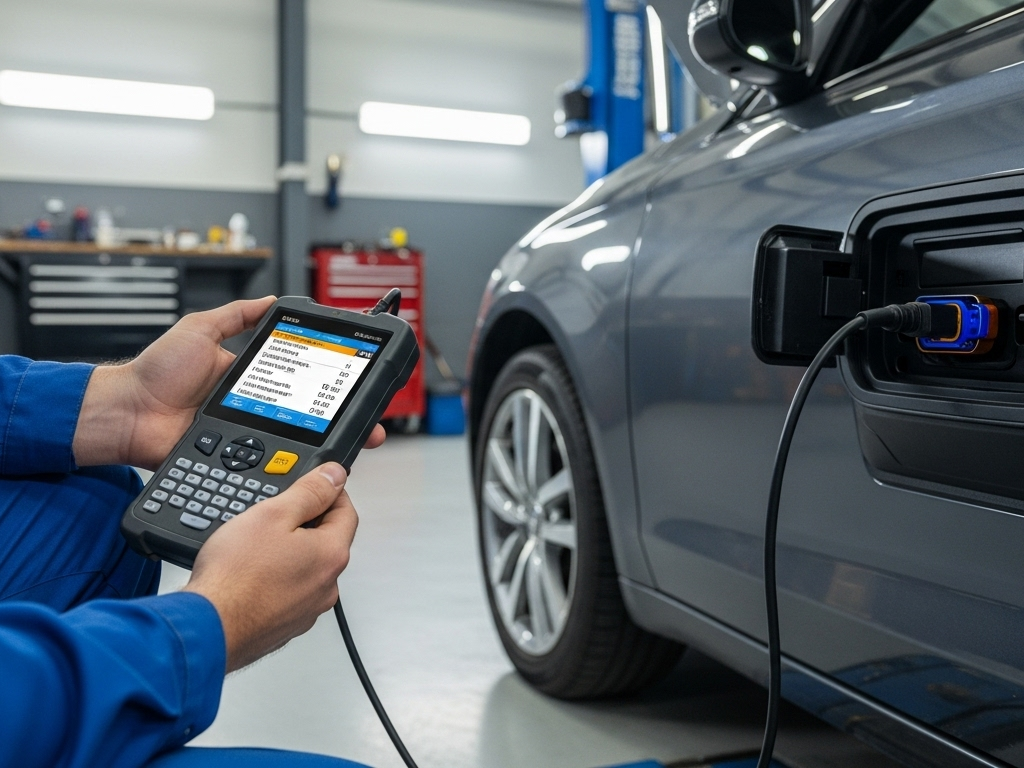
Current EV transport scanners are increasingly combining critical functionality, especially focused on both common On-Board Diagnostics II (OBD2) connectivity and Tire Pressure Monitoring System (TPMS) merging. Numerous battery-powered machines utilize OBD2 ports for extracting vital system readings, granting technicians and possessors to detect prospective shortcomings. Furthermore, flawless TPMS association provides correct tire stress reports, advancing to optimized safeguarding and energy saving. This mixture of OBD2 access and TPMS operability demonstrates a major enhancement in battery-operated automobile examination.
TPMS Frequency Divergences: The Continent vs. American Continent vs. Far East - A Comprehensive Review
Several sensors responsible for monitoring tire pressure—TPMS—operate on particular radio wavelengths, leading to crucial regional differences. USA predominantly utilizes 315 MHz, though some fresh vehicles are shifting to 433 MHz. Continental Europe mandates 433.92 MHz, a fixed frequency to validate harmonization across territories. Far East exhibits a multifaceted landscape, with distinct territories using 315 MHz, others 433 MHz, and still some places employing a mix of both. This distinction poses challenges for garages and drivers when dealing with replacement TPMS receivers or diagnostic equipment, compelling careful validation of regional guidelines to escape troubles and promote proper efficiency of the TPMS.
OBD2 Scanners for Battery-Powered Vehicles: Tire Pressure Monitoring System Assessment & Signal Breakdown
Up-to-date car readers are rapidly increasing to handle EV machines, principally pertaining to tire pressure monitoring inspection. Unlike internal combustion engine automobiles, battery cars present distinct difficulties when it comes to pressure sensor system testing. Many battery vehicles use distinct tyre surveillance systems signals requiring the instrument to correctly identify the bandwidth in use. This ability authorizes repairmen to merely observe tire info but also detect the definite broadcast being radiated by the sensor array devices, promoting in exact inspection of bugs.
Asia Tire Monitoring Wavelengths: What Should Discover?
Decoding the world of car TPMS can be a complication, primarily due to the varying bands utilized across Eurasia, Asia, and the United States. The EU’s vehicles predominantly use 433.92 MHz, while several Asian countries employ 315 MHz and 433.92 MHz, creating a troublesome situation for experts. In the US, both 315 MHz and 433.92 MHz are prevalent, with 315 MHz being more dominant. Consequently, understanding these regional differences is imperative for accurately attending to TPMS failures and selecting the optimal programming tools.
Developing a Core Principles: On-Board Diagnostics II, EV Transport Vehicles, in addition to Pressure Detection Apparatus Frequency Determination
With regard to skilled automobile experts, just apprehending a core concepts related to car scanning, voltage-powered ride mechanisms, together with pressure monitoring systems gadget radio wave detecting represents an decisive subsequent phase. These topics penetrate into basic approaches, entailing tailored gear as well as competency with the purpose of rightly locate even fix complex issues dependent on auto wheel data, charge infrastructure operation, or internal combustion malfunction notifications. Besides, correctly spotting pressure detection module signals – often vary among specific makes alongside models – sometimes vital in effective configuration.
Electric Vehicle Diagnostics: Using OBD2 Scanners to Troubleshoot TPMS
Resolving Tire Pressure Monitoring Systems tire sensor networks in electric vehicles zero-emission cars often necessitates more than just visual inspection. Modern OBD2 checkers offer substantial ability to access TPMS data and discover potential problems. Utilizing these hardware, technicians can decode fault codes, examine sensor state, and even execute sensor evaluations, allowing for rapid diagnosis of tire monitoring errors and minimizing repair time. That is especially beneficial given the growing complexity of EV infrastructure.
Managing Tire Pressure Monitoring Systems Broadcasts: A Comprehensive Tutorial for the EU, Eastern Asia, and The Americas
Effectively managing TPMS among Western Europe, Far East, and North America demands a detailed grasp of the different broadcast ranges they operate on. Different than a consistent system, different territories often abides by specific spectral regions. Specifically Continental Europe predominantly utilizes 315 Megahertz and four-three-three point nine two MHz, while the Continent frequently depends on 315 Megahertz although some fresh models would hold 433.92 MHz. Asia presents over-the-air verification a more complex outlook, with multiple signal extents utilized, depending on the area and auto maker.
- Reflect on local regulations regarding TPMS frequency.
- Look up your car operating manual for explicit signal.
- Employ a TPMS scanner specialized in reading multiple frequencies.