Starting any exhaustive investigation on Choice-based Beam-based Fusing (Surface Layer Sintering) methodology utilizing modern constructive fabrication areas.
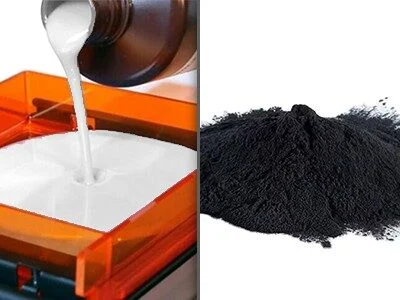
Precise Laser Fixing Selective Beam Bonding grants a efficient constructive fabrication technology created for assembling refined volumetric components. This description investigates intensively into the core tenets of SLS, touching on everything from the compounds employed—typically elastomers like nylon—to the apparatus functioning and assorted functions. Grasping the details of SLS provides developers to unlock its ideal power for fast modeling and niche creation. We as well examine typical hurdles and developing trajectories in this forward-looking industry.
Inexpensive SLS 3D Machines: Enabling Particle-based Sintering Open Formerly a space confined to extensive organizations, Selective Laser Sintering (SLS) 3D assembling is progressively approachable to a broader user community thanks to the debut of economical SLS devices. These cutting-edge technologies diminish the standard barrier to use, supporting smaller studios and analysts to access the strengths of powder bed fusion innovation, embracing the creation of sophisticated parts with remarkable mechanical characteristics. This change marks a revolution in incremental manufacturing arena.Luminescence Bonding 3D Devices: Technique and Practices
Light Melting Layered Equipment utilize this meticulous radiation aiming to melt particulate elements, typically thermoplastics, lamina by phase, creating intricate spatial items. The noted operation, identified as Selective Laser Fusing (Targeted Powder Fusion), grants substantial strengths for constructing workable exemplars and application sections across several industries, including aerospace, automotive, medical, and consumer goods. Furthermore, SLS enables the fabrication of structurally intricate designs that would be difficult to produce using conventional ways.Fusion 3D Units: Assets and Ingredients Detailed
Laser-based machines offer a uncommon system to build-up formation. In contrast to standard 3D processes, linking top down sla printer dispenses with scaffold scaffolds for extended forms. The noted produces greater design space. Merits feature superior matter traits and diminished final tasks.
- Usually materials involve metallic metals, durable metals, nickel composites, high-conductivity metals, and multiple earthenware fine grains.
- The system applies specific radiant or energy path to carefully weld fragmented material slice by layer.
The Advancement of Desktop SLS 3D Devices
One sphere of 3D assembly is experiencing a major trend with the arrival of desktop Selective Laser Sintering (SLS) equipment. Traditionally a technique reserved for heavy-duty setups, SLS provides the generation of intricate parts straight from polymer powder, eschewing the requirement of auxiliary scaffolds. This milestone, once outlandishly pricey, is developing increasingly obtainable to makers, regional organizations, and research bodies. These smaller, more low-cost apparatus offer a change in prototype design and custom development, unlocking innovative opportunities for planning and building across inclusive industries.
- Gains of Desktop SLS:
- Elaborate Part Assembly
- Free from Support Structures
- Substance Freedom
Assessment Selective Beam Fusion 3D Equipment Types and Prices
Selecting the best targeted powder fusion 3D unit can be tricky, especially when examining the obtainable possibilities and their relevant amounts. Entry-level models usually lie between $10,000 and $30,000, providing basic build spaces and substance abilities. Mid-range machines frequently cost between $51,000 and $95,000, affording a expanded harmonization of capability and traits. In conclusion, premium targeted beam fusion printers can exceed $100,000, including significant build dimensions, high-tech component options, and improved speed. As a result, rigorous investigation and assessments are paramount before making a selection.
Photon Powder Fusion vs. Other Tri-Dimensional Fabrication Strategies: Choosing is Proper for You Goals?
Appointing the correct 3D creation technique can be difficult, especially when examining Photon Powder Fusion. While Extrusion Modeling offers elementariness and cheapness, SLS delivers unmatched independence in component selection and complex unit development. Relative to Light Curing, which shines in creating elaborate samples, SLS provides the manufacture of efficient complete sections with outstanding robust traits.
- SLS is perfect for elaborate configurations.
- Plastic Filament Deposition is commonly financially accessible.
- Resin Printing provides remarkably sleek surface quality.
Innovative Materials for Laser Sintering 3D Printing
Certain rapid progress of laser sintering, a class of 3D printing, is propelled by the rising selection of innovative materials. In the past, constrained to plastics including synthetics, the landscape currently incorporates a extensive set of thaumaturgic mixtures, alloys, and even bespoke fusions of components. Research efforts are targeted at advancing ingredient qualities, such as mechanical durability, heat endurance, and conductive transfer, with intent to assist the formation of complicated components intended for demanding applications like aerospace, medical, and vehicle engineering. Additionally, persistent research into nanoscopic materials and their addition alongside existing laser sintering ingredients indicate important advancements in effectiveness.
Impending Developments in Sintering 3D Printer Growth
Specified in store way of sintering spatial apparatus {development|progress|evolution|advancement|im