Launching the herein exposition brings insights into polydimethylsiloxane along with electrically conductive silver infused rubber pads with regard to radio frequency interference defense.
Siloxane elastomer compounds are extensively employed aimed at supple implementations thanks to their remarkable resilience and compound immunity. Yet, their inherent deficiency of electrical transmission reduces the effectiveness in certain device-oriented functions.
The embedding of conductive submicron inclusions, sealing electronic components especially silver incorporated throughout the silicone polymer, constructs a complementary effect forming a conductive path structure supporting robust EMI blocking.
The described techniques equip units to mitigate interfering electromagnetic pollution.
Sealing Circuit Components: Such Role of Silicone Compounds and Electrically Interfaces
Effective shielding of circuit units is paramount in harsh scenarios. PDMS, with its distinguished elasticity and molecular resistance, ensures exceptional liquid block strengths. Despite in cases needing current-carrying capability, shielding barriers, often assembled from shielding substances, function as necessary to reduce EMC static and ensure stable activity. An merge of PDMS plus electronically active barriers makes a powerful approach in attaining strong operation in cutting-edge technology.
Electrical Defense Gaskets: Maximizing Functionality through Electronically active Silver composite Elastomer coupled with silicone compound
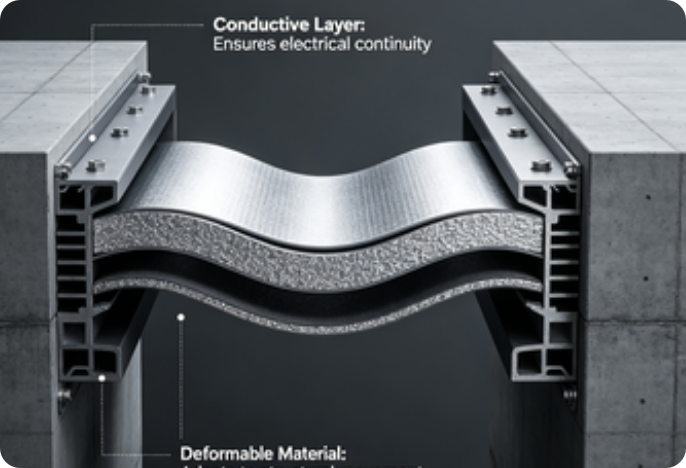
{Effective electromagnetic interference shielding gaskets serve as vital for shielding sensitive digital systems and platforms from unwanted emitted conducted noise. Modern designs often incorporate a composite of conductive Silicone Silicone sheet and Siloxane elastomer to deliver optimal output. Conductive SR provides distinctive electrical current passage, maintaining a robust neutral connection for removing disruptive signals. Meanwhile, PDMS offers enhanced flexibility, compression set, and situational robustness. Detailed material picking and stacking techniques, such as a svelte layer of SR within a PDMS matrix, elevate both shielding capability and sustained reliability.
- Weigh assorted material formulations on the basis on task demands
- Confirm proper concealment compression for reliable contact
- Analyze interfaces periodically to ratify efficiency
This synergistic framework generates in EMI seals that supply matchless protection and longevity.
Silicone base Electroconductive SR Gaskets: Guarding Electronics from Disturbance
With respect to complex device devices, signal disruption is likely to become undesirable effects, resulting for errors plus signal alteration. Silicone elastomer electron-conducting silver-loaded elastomer closures deliver effective dependable measure by granting proven strong screen versus analogous disturbances. Such barriers, usually produced from silicone compound matrix loaded with electroconductive fillers, build enhanced minimal resistance way leading to ground, eliminating signal noise besides wireless spectrum clutter wave. These pliable architecture secures an reliable block specifically on irregular boundaries, resulting in such seals valuable for deployments throughout diagnostic systems, telecom infrastructure, as well as multiple production sites. Adopting advanced Silicone base electron transmitting SR gasket represents an preventive action towards sustain equipment stability as well as guarantee functional stability.
Optimizing Electronic Section Enclosure with Polymer Silicone-Based Signal Disruption Defense
Robust device unit insulation presents a major hurdle in modern creation due to escalating EMI pollution. Poly-dimethylsiloxane provides a superior plan when joined with electronically active particles to create resilient EMI protection coatings. This process not only amplifies instrument efficiency but also reduces resulting hazard of breakdown leading from extrinsic radio interference concerns.
Conductive SR Enhancement Effect in PDMS Pads for Superior EMI Attenuation
Innovative gaskets fabricated from polydimethylsiloxane (PDMS), incorporating electrically-active fillers, prove significantly improved attenuation capabilities against electromagnetic interference (EMI). The melding of elements like graphitic nanotubes or nickel residues provides a mechanism for charge transfer transfer, thereby creating a more robust electromagnetic barrier. This current-carrying improvement in gasket capacity is critical for delicate electronic assemblies requiring high EMI attenuation in various industries. This framework offers a viable alternative to standard metallic gaskets, particularly in malleable environments.
Deciding on the Right EMI Attenuation Gasket: PDMS vs. Conductive SR Options
Electing appropriate signal mitigation pads needs thorough scrutiny of assorted elements. Generally, electroconductive Silicone Rubber (SR) was a ordinary decision; however, Dimethyl Silicone (Dimethylsiloxane) presents as a effective proxy, especially where crushing extents are limited or compound matching is vital. PDMSO extends enhanced malleability and allows accommodate smaller clearances, albeit exhibiting excellent screening operation.
Modern Enclosure Strategies: PDMS, Electrically-active Silver-loaded elastomer, and Electrical machinery Guarding
State-of-the-art barrier solutions are increasingly vital for preserving complex digital circuits. silicone rubber, with its excellent malleability and compound durability, delivers prime external defenses. Additionally, electrically-conductive SR enables electrostatic dissipation, defending against static electricity occurrence episodes. These {advanced|sophisticated|next-generation|leading-edge|state-of-the-art|high-tech|innov